Hawthorne factory and the machine that builds
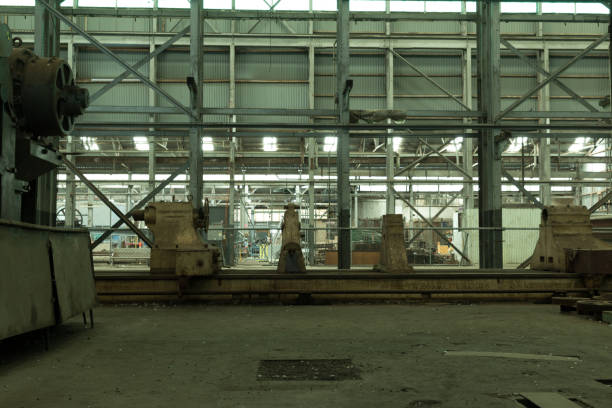
The Hawthorne factory, at 1 Rocket Road in Los Angeles, isn’t just where rockets are made. It’s the central nervous system of an operation that has fundamentally changed how we think about agency in the space industry. And by agency, I don’t mean an advertising shop or a PR firm. I mean power. The ability to decide. The ability to act. The ability to build your own hardware, your own software, your own fuel, your own launch pads, and your own satellites without asking anyone for permission.
Before SpaceX, the space industry was defined by a rigid division of labor. Lockheed Martin built the bus. Boeing built the payload. Aerojet Rocketdyne built the engine. Northrop Grumman built the fairing. The Air Force ran the range. NASA reviewed the paperwork. And everyone had a cost-plus contract that rewarded delay. If you wanted to launch a satellite, you didn’t just buy a rocket. You bought a committee. You bought a bureaucracy. You bought a process that took years and cost billions, and you thanked the gods that at least you weren’t dealing with the Soviet Union.
SpaceX reversed this by vertical integration. They didn’t just make engines. They made the combustion chamber. The turbopumps. The valves. The avionics. The flight computers. The trajectory software. The ground support equipment. The launch mount. The fuel. And they did it all in that one building on Rocket Road, where the assembly line for a Falcon 9 runs right past the office where the engineers sit. That’s not a clever marketing phrase. That’s a physical reality. You can stand in the Hawthorne parking lot and watch a Falcon 9 being built through a glass wall.
The machine that builds is the real secret. SpaceX didn’t invent the rocket engine. They invented the process for building rocket engines at scale, at speed, and at a fraction of the legacy cost. The Hawthorne factory is built around a single continuous flow line. Every stage of assembly happens in sequence, with components moving down the line on rails. Parts arrive at one end, and a fully assembled rocket rolls out the other end in about three weeks. That’s faster than some companies take to file a purchase order.
This gives SpaceX an agency that no other launch provider has. When they want to change the design of a Merlin engine, they don’t have to renegotiate a contract with a supplier in Utah. They walk twenty feet, tell the machine shop, and three hours later they have a new part. When they want to iterate on landing software, they don’t submit a change request to a government interface. They push a commit and fire another booster into the ocean until they get it right. They can fail fast because they own the failure. They can learn because they own the learning.
For the casual space enthusiast, this matters more than any individual launch. The Starlink constellation, the Starship program, the Mars architecture—none of it is possible without the factory that can produce hardware faster than it can be designed. SpaceX now builds more rocket engines in a single month than the entire U.S. aerospace industry built in a year during the Space Shuttle era. That’s not hyperbole. It’s a fact you can verify by looking at the serial numbers on Merlin engines leaving Hawthorne.
Agency, in the old space world, was distributed. It was shared among contractors, politicians, regulators, and the occasional astronaut. In the new space world, agency is concentrated in a single building on the west coast of the United States, where a team of people who are not that much older than you are building machines that will go to Mars. They don’t ask permission. They don’t wait for approval. They design, build, test, crash, rebuild, and launch.
The Hawthorne factory is the physical manifestation of that principle. It is the machine that builds the machine that changes the world. And for anyone paying attention, that changes what you think is possible.
Next time you watch a Falcon 9 booster land on a drone ship, remember that the real miracle didn’t happen on the ocean. It happened in a concrete building on Rocket Road, where a group of people decided to stop asking for permission and start building.
Your move, legacy aerospace.
Space News
Latest Articles
New rockets, upcoming launches, and the stories shaping humanity's push off this planet. No astronomy degree required.