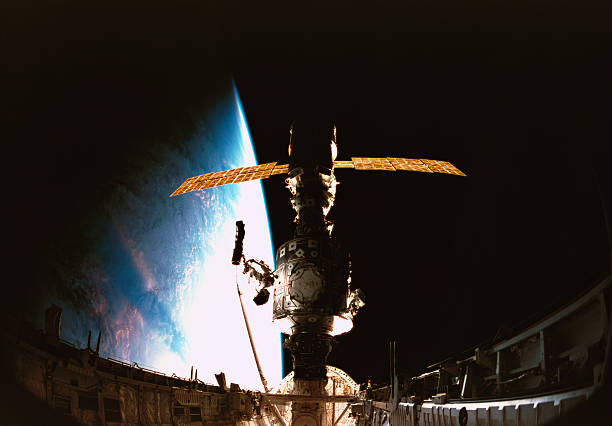
Soviet rocketry design philosophy explained

The core of Soviet rocketry was simplicity through brute force. Unlike American engineers who obsessed over lightweight materials, precise machining, and redundancy through complexity, the Soviet approach was to build things that were crude, overbuilt, and nearly impossible to break. If an American engine was a Swiss watch, a Soviet engine was a sledgehammer. Both get the job done, but one can survive being dropped off a truck.
This philosophy came directly from their Cold War reality. Soviet manufacturing wasn’t capable of the same precision as the American aerospace giants. So instead of trying to match the West’s tolerances, they designed engines that could tolerate sloppiness. Take the NK-33 engine—originally built for the N-1 moon rocket. It has no gimbaling system for steering. Instead of pointing the nozzle, it used differential throttling—each engine adjusted its thrust independently to steer the entire cluster. That sounds insane, but it worked. And because the engines themselves were simpler, they were cheaper to produce and easier to maintain.
Another hallmark of Soviet design was flight-proven simplicity in propulsion. The RD-180 and its predecessor the RD-170 are closed-cycle engines that run on kerosene and oxygen, but they operate at extreme chamber pressures—over 600 atmospheres. That’s insane by American standards. Most US engines ran at lower pressures to reduce stress on components. The Soviet solution was to build the engines with thick-walled chambers and massive turbopumps that could handle the abuse. The result was an engine that delivers insane thrust-to-weight without failing. American engineers spent decades trying to replicate that pressure level. They still haven’t fully matched it.
Then there’s assembly. American rockets are built vertically, piece by piece, with workers crawling around scaffolding. Soviet rockets are built horizontally, rolled to the launch pad on a train, and tilted upright just before launch. This seems backward, but it has a huge advantage. Horizontal assembly means you don’t need a giant vertical integration building that costs millions. It also means the rocket is less susceptible to wind loads during assembly. And because the rocket is assembled lying flat, you can use heavy, cheap steel for the structure instead of expensive lightweight alloys. That steel adds weight, but who cares? Soviet rockets were always designed with massive thrust margins to handle the extra mass. More fuel, more muscle, more reliability.
Of course, not everything was perfect. The Soviet Union had its share of catastrophic failures—the N-1 moon rocket exploded four times because they never mastered multi-engine synchronization. But when they got it right, they got it really right. The Soyuz rocket, which first flew in 1966, is still launching cosmonauts and cargo today with an incredible 97% success rate. That’s not luck. That’s decades of refinement guided by a simple principle: don’t make it fancy, make it tough.
Another subtle but critical piece of Soviet philosophy was the use of hypergolic propellants—chemicals that ignite on contact. American rockets often use cryogenic fuels like liquid hydrogen, which require complex insulation and constant venting. Soviets used storable hypergolics for many of their military and heavy-lift vehicles. These fuels are toxic, corrosive, and nasty to handle, but they don’t boil off. A rocket loaded with hypergolics can sit in a silo for years and still launch immediately. That’s why the Proton rocket—another 1960s design—kept flying for decades. It’s not elegant, but it’s always ready.
So why does any of this matter to a guy in his 20s who just wants to watch Starship land? Because the Soviet design philosophy is making a comeback. Rocket Lab’s Electron uses 3D-printed engines and simplified manufacturing. SpaceX’s Raptor runs at extreme pressures just like the RD-170. The future of space travel isn’t about perfection—it’s about reliability at scale. The Russians figured that out before anyone else. They built rockets that could survive a war, a freeze, or a bad weld. They built rockets that were ugly, heavy, and brutally effective. And those rockets are still flying.
When you see a Soyuz launch from Baikonur today, you’re watching a 60-year-old design that outlasted the empire that built it. That’s not nostalgia. That’s engineering that worked because it was designed to never stop working.
Space News
Latest Articles
New rockets, upcoming launches, and the stories shaping humanity's push off this planet. No astronomy degree required.