Ultrasound training and the remote guidance protocol
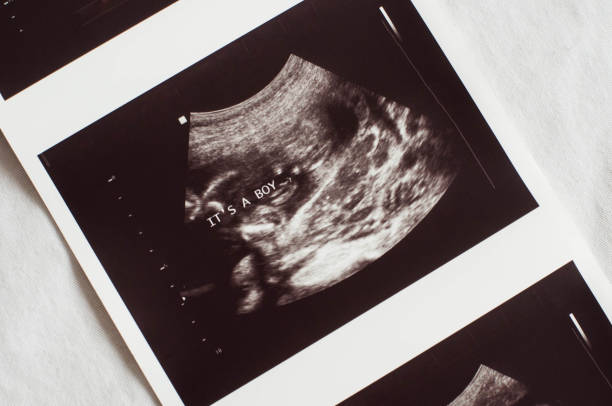
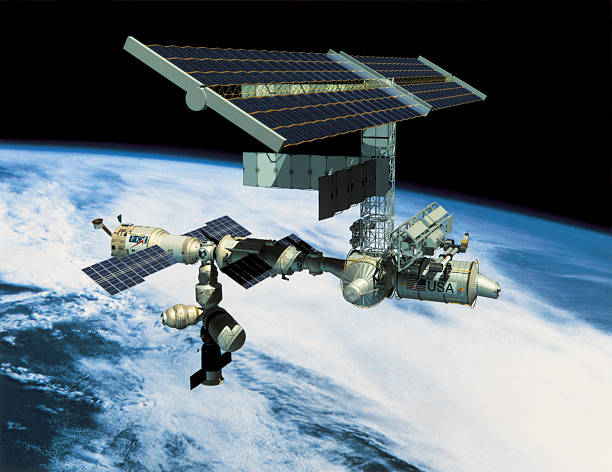
When people imagine healthcare in space, they picture a full surgical bay with a trained physician in a white coat. That is a fantasy. The International Space Station carries a medical kit the size of a carry-on suitcase. There is no surgeon on board. There is no MRI machine. There is an ultrasound probe that is roughly the size of a TV remote, and that small piece of plastic is the single most important medical tool in the void. The reason is simple: ultrasound does not use radiation, it is compact, and it can image soft tissue in real time. But the tool is useless without the training to use it.
The problem is that astronauts are not doctors. They are pilots, engineers, physicists, and biologists. They know orbital mechanics and life support systems, but they do not know how to differentiate a gallstone from a kidney stone on a grainy black-and-white screen. That is where the remote guidance protocol comes in. The concept is brutally efficient. A crew member places the ultrasound probe on the patient. A surgeon on the ground watches the same video feed on a laptop in Houston or Moscow. The surgeon says, “Move the probe two centimeters to the left. Angle it up ten degrees. Now hold still.” The crew member follows the commands. The diagnosis is made in real time, thousands of miles apart.
This protocol is not a theoretical exercise. It has been tested repeatedly on the ISS and during parabolic flights. NASA’s Ultrasound 2 experiment proved that non-physician astronauts could perform diagnostic-quality scans of the eye, the heart, and the abdomen after only a few hours of training. The key was not turning them into sonographers. It was teaching them how to take orders. The training focuses on probe placement, hand-eye coordination, and the ability to ignore panic when the patient is in pain. The medical judgment stays on Earth. The hands stay in space.
Why does this matter for the future? Because the next step is not low Earth orbit. It is the Moon. It is Mars. When you are going to Mars, the communication delay is between four and twenty-four minutes each way. You cannot have a surgeon watching a live feed and giving instructions in real time. A simple kidney stone could kill a crew member before Houston even sees the image. This means that the remote guidance protocol must evolve into an autonomous or semi-autonomous system. The ultrasound probe itself will need to contain embedded artificial intelligence that can identify common pathologies, measure fluid levels, and suggest a course of action without waiting for a human on Earth to interpret the data.
The training for this next phase is already being developed. It is less about memorizing anatomy and more about learning to trust the machine. Astronauts will practice on phantoms, on themselves, and on cadaver tissue during ground simulations. They will be drilled on emergency scenarios that read more like a survival manual than a medical textbook: if you see this pattern on the screen, you inject this drug. If you see that pattern, you must attempt a guided needle aspiration. The margin for error is zero. There is no medevac from Mars.
The hospital void is not a place of sterile hallways and waiting rooms. It is a cramped module where the walls are covered in Velcro and the air smells like recycled sweat. The doctor is not there. The surgeon is a voice in a headset or a software prompt on a tablet. The ultrasound probe is the knife that does not bleed. It is the only window into the body that a spacefarer has. If you are going to live out there, you need to know how to hold that probe steady, listen to the voice on the other end, and keep your hands from shaking. That is the real training. That is the only thing standing between a minor problem and a fatal emergency in the deepest silence humans have ever known.
Space News
Latest Articles
New rockets, upcoming launches, and the stories shaping humanity's push off this planet. No astronomy degree required.