Supermassive black holes and the galaxy correlation
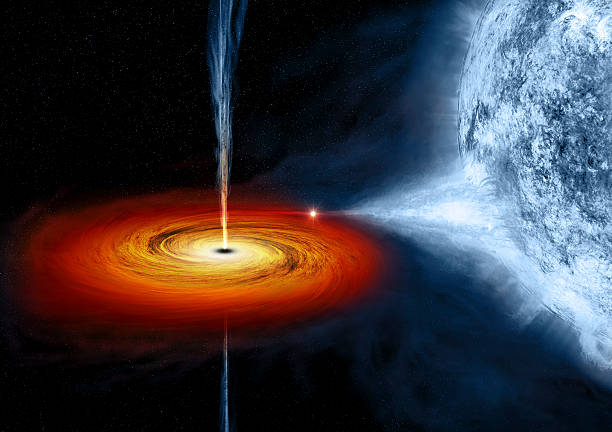
Let’s start with the basics. A supermassive black hole is not your average stellar-mass black hole. These monsters range from millions to billions of times the mass of our Sun. Sagittarius A, the one sitting at the center of the Milky Way, clocks in at about 4.3 million solar masses. That sounds enormous, but it’s actually on the smaller end of the scale. Compare that to the black hole in the galaxy M87, which weighs in at around 6.5 billion solar masses—the same one the Event Horizon Telescope famously imaged in 2019. These objects are not passive. They are engines of destruction and creation, capable of launching relativistic jets that stretch for hundreds of thousands of light-years.
The correlation itself was first noticed in the late 1990s and early 2000s. Astronomers realized that if you plot the mass of a galaxy’s central black hole against the velocity dispersion of stars in the galaxy’s bulge—essentially how fast those stars are moving around—you get a straight line. Bigger bulge, bigger black hole. This is known as the M-sigma relation, and it’s held up across dozens of observations. It doesn’t matter if the galaxy is a quiet spiral like our own or a chaotic elliptical. The relationship sticks.
Why does this matter for someone interested in deep space and the future of space travel? Because it tells us that black holes are not isolated curiosities. They are integral to galaxy formation and evolution. To understand how galaxies grow, we have to understand how black holes feed and regulate that growth. And if we ever want to send probes—or even crews—into the deep galactic core, we need to know what we’re flying into.
Current theories suggest that supermassive black holes and their galaxies grow together through a process called feedback. When a black hole actively consumes gas and dust, it doesn’t just swallow everything quietly. Some of that material gets superheated and blasted outward as radiation and jets. This energy pushes surrounding gas away from the galactic center, effectively shutting down star formation in the bulge. It’s a self-regulating cycle. The black hole grows until its energy output is strong enough to cut off its own food supply. That limit appears to be exactly what the M-sigma relation describes.
For the diehards who follow missions like the James Webb Space Telescope or the upcoming Lynx X-ray Observatory, this correlation is a key target. By observing galaxies at different distances—and therefore different points in cosmic time—scientists can watch this relationship develop. Early universe galaxies show us what it looks like before the black hole and bulge have fully synchronized. That data is already challenging some of our assumptions. Some of those early black holes are way too big for their galaxies, suggesting they might have formed first and then pulled the galaxy together later.
There’s also a practical angle here for anyone thinking about interstellar navigation. The center of the Milky Way is a crowded, violent place. High-energy particles, intense radiation, and unpredictable flares from Sagittarius A make it a hazard zone. If we ever build infrastructure near the core, we will need to understand the behavior of that black hole on human timescales, not just cosmic ones. The correlation tells us that the black hole’s activity is linked to the overall state of the galaxy. If the Milky Way merges with Andromeda in a few billion years, expect that black hole to wake up and start blasting.
The bottom line is straightforward. Supermassive black holes are not galactic afterthoughts. They are the engines that drive the evolution of their host galaxies, and the correlation between them is one of the cleanest empirical laws in deep space astronomy. It’s a reminder that the universe operates on rules we are only beginning to grasp. For anyone serious about where space travel is headed, keeping an eye on these relationships isn’t just academic. It’s preparation for the kind of deep space that lies ahead.
Space News
Latest Articles
New rockets, upcoming launches, and the stories shaping humanity's push off this planet. No astronomy degree required.