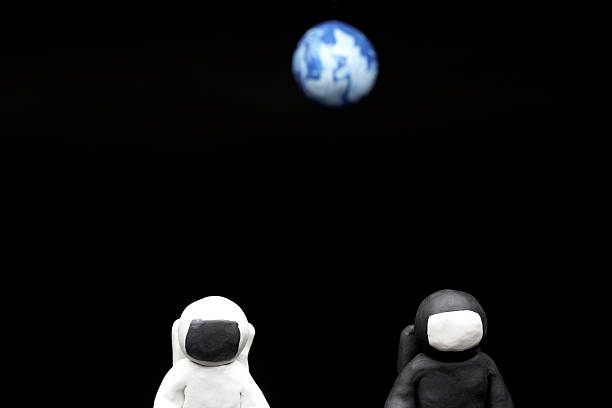
The overview effect and the cognitive shift
The overview effect was coined by author Frank White in 1987 after interviewing astronauts. He noticed a pattern: people who saw Earth from orbit didn’t just admire the view. Their entire framework for reality got rewired. Borders vanished. National conflicts looked like kindergarten squabbles. The planet became a single, fragile system. For a weekend tourist on a suborbital hop, that feeling fades fast. But for a crewmember on a six-month ISS rotation or a future Mars mission, it sticks. It changes how you think, how you lead, and how you handle the slow grind of isolation.
Here’s the practical side. Your brain evolved on a planet where horizon means distance, sky means up, and gravity means down. In orbit, those cues are gone. Your vestibular system throws a fit. Your eyes keep reporting that “down” is wherever your feet happen to float. Eventually your neuroplasticity kicks in, and you adapt. But the real shift isn’t sensory—it’s conceptual. You look at Earth and you don’t see countries. You see a closed loop of water, air, and life. You see the boundary between survival and annihilation is about eighty miles of thin gas. That’s not philosophy. That’s data your brain can’t unsee.
For a long-duration crew, this cognitive shift has hard consequences. First, it crushes tribalism. You stop caring about who wins an election back home when everyone back home is living on the same speck. That sounds nice, but it creates friction. Ground control still operates on Earth-time priorities. They care about budgets, politics, and media cycles. You don’t. You care about life support numbers and whether that seal on the portside hatch is holding. The overview effect makes you less patient with Earth drama. Mission planners have to account for that. If your commander gets the shift three weeks in and starts arguing against a scheduled EVA because “it might disturb the fragile ecosystem below,” you’ve got a problem.
Second, it changes your sense of time. On Earth, days are marked by sunrise and sunset. In orbit, you get sixteen sunrises in twenty-four hours. Your circadian rhythm gets punched in the gut. But the deeper change is existential. When you see Earth rotating beneath you, you realize every human life on that ball lasts about eighty orbits. The overview effect compresses history. You feel like you’re seeing four billion years of evolution laid out in a single glance. That can be humbling. It can also be paralyzing. Some astronauts report a sense of helplessness. You see the big picture so clearly that small tasks feel meaningless. Why fix that stuck airlock valve when the whole planet is slowly cooking itself? That’s the cognitive trap. Crews need mental drills to counter it. Pragmatic routines. Checklists. The same discipline that keeps you from spiraling in a submarine or a polar station.
Third, it reshapes relationships. You’re confined with three to six other humans. Normal social friction gets magnified. But the overview effect can pull you together. You share a perspective no one on Earth can access. You become a tribe of people who’ve seen the thing. That creates loyalty. It also creates distance from everyone who hasn’t. Astronauts report difficulty readjusting after return. They feel disconnected from people who obsess over sports scores or traffic jams. That’s not arrogance. It’s a real neurological and cognitive recalibration. Your brain has re-mapped its sense of scale. Billions of people become an abstract concept. The crew becomes your whole world.
For American men in their twenties who dream of living in space, here’s the straight truth. The overview effect isn’t a reward. It’s a responsibility. You will lose your ability to care about things you used to care about. You will gain a perspective that makes you weird at parties. Your wife or girlfriend will roll her eyes when you describe the Amazon rainforest as a “green artery.” Your friends will think you’ve joined a cult. But if you’re going to live in space for a year or more, you need to understand this mental shift going in. Train for it. Simulate it. Talk to veterans who’ve been through it. Because the effect doesn’t wait. One day you’re cleaning a filter. The next day you look out the window and your whole identity rewrites itself.
Space travel is a hardware problem. Rockets. Life support. Radiation shielding. It’s also a wetware problem. Your brain is the least predictable component in the system. The overview effect is real. It’s measurable. And if we’re serious about sending crews to Mars, we need to treat it like a piece of engineering. Because the men and women who make that journey won’t come back the same. And that’s the point.
Space News
Latest Articles
New rockets, upcoming launches, and the stories shaping humanity's push off this planet. No astronomy degree required.