Watching a launch from Assateague Island
Wallops is not Cape Canaveral. It is smaller, quieter, and less flashy. But that is exactly its appeal. Wallops handles suborbital sounding rockets, Orbital ATK Antares launches to the International Space Station, and occasional missions for the Department of Defense and commercial customers like Rocket Lab and Firefly Aerospace. Because the site is relatively low-profile, there are no huge crowds, no traffic jams that last for hours, and no overpriced VIP packages. You can pull up, park on the beach, and watch the sky turn to fire.
Assateague Island is about a forty-five minute drive south of the Wallops facility, depending on where you set up. The island itself is a national seashore, meaning it is undeveloped. No hotels, no boardwalks, no neon signs. Just dunes, marsh grass, and the ocean. You want to watch a launch from here? You pay the entrance fee, you drive onto the sand (if you have a four-wheel drive and an OSV permit), or you park at the State Park side and walk a quarter mile to the beach. Then you plant yourself, crack a beer, and wait.
The key advantage of Assateague over the official NASA viewing sites is the angle. At Wallops, the public viewing areas are located to the side of the launch pad, often several miles away and partially blocked by trees or buildings. You see the rocket once it clears the tree line. From Assateague, you are looking due west across the water. The launch pad sits on the mainland, maybe ten to fifteen miles away as the crow flies. On a clear evening, you get an unobstructed view of the entire ascent. The rocket lifts off, and for the first few seconds it looks like a tiny, bright star rising over the marshes. Then it punches through the atmosphere, and the sound wave hits you thirty to forty seconds later. It is a low, rolling thunder that you feel in your chest, not just hear. The beach vibrates. The horses don’t even flinch. They are used to it.
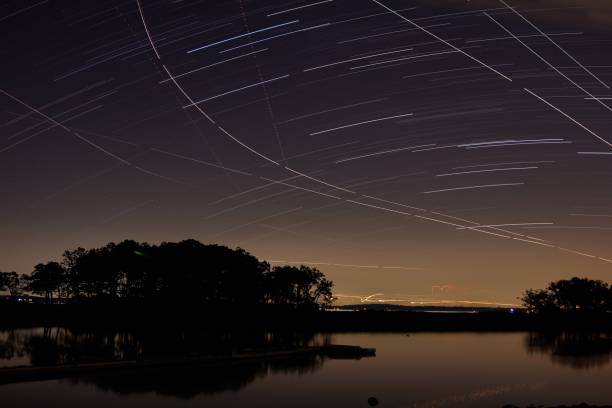
There is a practical reason Assateague works so well. Wallops launches are often scrubbed or delayed. The weather on the Eastern Shore is unpredictable. But if you are on the beach, you have a front-row seat to the entire flight path. You can see the rocket arc out over the Atlantic, then the second stage ignition, then the plume spreading in the upper atmosphere. If the launch is at sunrise or sunset, the sunlight catches the exhaust trail and turns it into a glowing, twisting ribbon. It looks like something out of a sci-fi movie, except it is real, and you are standing in the cold sand, sand fleas biting your ankles, and you know you are watching American engineering at its simplest and most violent.
There is no commentary. No countdown broadcast over loudspeakers at Assateague. You rely on your phone, a portable radio, or just watching the clock. That is part of the experience. You are not a spectator in a crowd. You are an observer on the edge of the continent, watching a piece of technology escape the Earth’s gravity. It feels more like an expedition than a trip to a theme park.
A few practical tips if you go. Check the launch window on the Wallops website or the NASA Wallops Twitter feed. Arrive at least an hour before the window opens. The beach gets crowded on weekends, but nowhere near as bad as Cape Canaveral. Bring a chair, a cooler, binoculars, and a warm jacket. Even in summer, the wind off the Atlantic can cut through you. If you have a DSLR with a telephoto lens, you can get solid shots. If you are on the OSV beach, you can drive right up to the waterline and set up there. Just be careful with the tides and the soft sand. Do not be that guy who gets his truck stuck and misses the launch.
Watching a launch from Assateague Island is not for the casual tourist who wants a clean, controlled experience. It is for the guy who wants to feel the salt spray, hear the waves, and then watch a million pounds of thrust rip a hole in the sky. It is the closest you can get to the early days of the space program, when people drove out to empty beaches with blankets and radios, hoping to catch a glimpse of history. That spirit is still alive at Wallops, and Assateague is where you go to live it.
Space News
Latest Articles
New rockets, upcoming launches, and the stories shaping humanity's push off this planet. No astronomy degree required.