What came before and the question science avoids
When you look out at the night sky from a campground in Montana or a rooftop in Austin, deep space looks like a black velvet curtain poked with holes. But that blackness isn’t just distance; it’s a wall. Go far enough back in time, and you hit the cosmic microwave background—the faint hiss of photons released when the universe was only 380,000 years old. Before that? The universe was opaque. Before that? A soup of quarks and gluons. Before that? Inflation, a bizarre exponential stretching that lasted a fraction of a yoctosecond. And before that? Crickets. Silence. The equations break. Physics as we know it stops working because the energy densities hit a point where general relativity and quantum mechanics refuse to shake hands.
This boundary is called the Planck epoch, and it’s the closest thing science has to a “here be dragons” sign. The standard line is that asking what came before the Big Bang is like asking what’s north of the North Pole. It sounds clever, but it’s a dodge. The real issue is that our models of deep space are built on data that starts after a certain point. We have no observational evidence from before inflation, and we may never get any. The universe’s first light—the CMB—is a snapshot of the cosmos when it cooled enough to let photons travel freely. That’s the starting line for everything we measure. Everything before that is inference, math, and a little bit of faith dressed up in tensor fields.
What came before deep space? That’s not just a question for philosophers in stale libraries. It matters because if you’re casually following space travel—SpaceX Mars missions, Blue Origin’s orbital plans, the James Webb Space Telescope scanning exoplanet atmospheres—you’re looking at a universe that supposedly popped out of nowhere. But “nowhere” is a cop-out. Various proposals exist. The Hartle-Hawking no-boundary proposal suggests time wasn’t even a concept before the Big Bang; the universe simply is a closed surface with no starting edge. Cyclic models from Penrose and others argue the Big Bang was just one bounce in an infinite series of universes, each decaying into the next like echoes in a cathedral of black holes. String theory offers the multiverse, where our deep space is one bubble among countless others, and what came before was just another bubble’s Big Bang. None of these are proven. None are even testable with current technology. And that’s the part science avoids: we don’t know, and we may never know, but we also can’t admit that publicly without undermining the public funding that keeps the telescopes running.
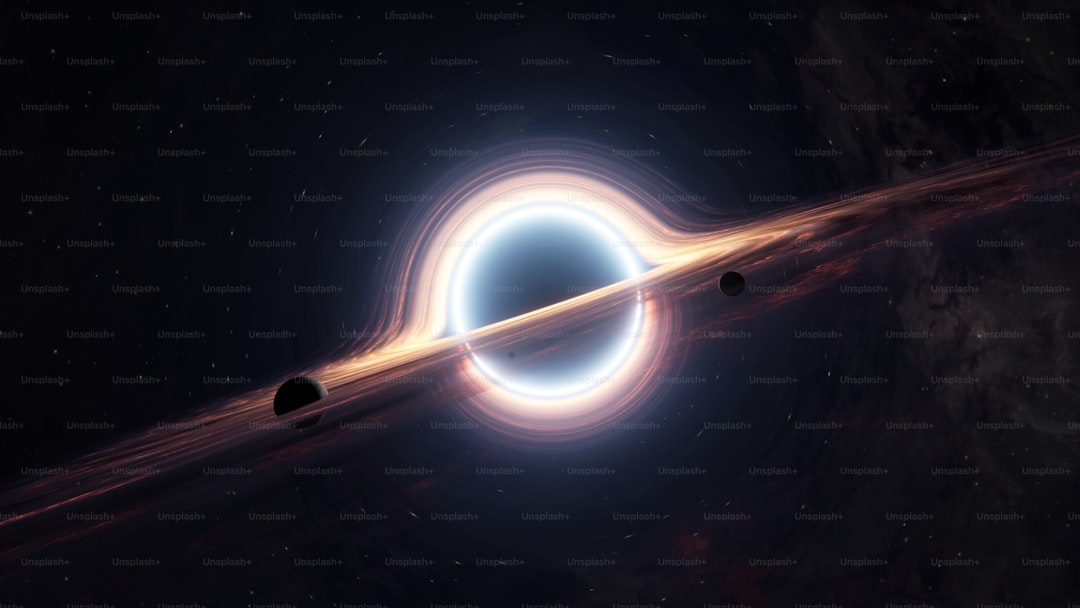
For an American guy in his twenties who wants to know if he’ll ever buy a ticket to a space hotel or watch a Starship land on the Moon, this all feels academic. But it’s not. The future of deep space travel depends on understanding deep space itself. If the universe is cyclic, then the dark energy pushing galaxies apart might eventually reverse, which changes the long-term strategy for interstellar colonization. If there was something before the Big Bang, like a previous universe full of stars that collapsed into a singularity, then the physics of black holes becomes directly relevant to how we might harness energy or navigate extreme gravity wells. The JWST is already finding massive galaxies at redshifts that challenge the standard timeline—galaxies that seem too mature for a universe that’s supposedly only 500 million years old. That kind of data forces cosmologists to start asking the forbidden question again.
The bottom line is this: deep space isn’t just what’s out there. It’s what was out there before we had any business measuring it. Science is great at taking snapshots and building timelines that fit the evidence we have. It’s terrible at admitting the evidence is incomplete because the universe itself obscures its own birth certificate. The Big Bang is a successful model for everything from the abundance of helium to the structure of galaxy clusters. But it’s not an origin story. It’s a report from the middle of a movie with missing reels.
So the next time you look up at a clear, dark sky and feel that small, ancient hum of wonder, remember: you’re staring at a universe that won’t tell you where it came from. And the scientists who study it are, for the most part, fine with that. They’re busy mapping what we can see. The void before deep space is the question they leave for the next generation. That generation is you. Don’t let them off the hook.
Space News
Latest Articles
New rockets, upcoming launches, and the stories shaping humanity's push off this planet. No astronomy degree required.