The trace contaminant control and the smell
Let’s start with the obvious problem: you are a giant, leaky bag of chemicals. Your body constantly off-gasses acetone (from fat metabolism), methane (from digestion), and ammonia (from sweat and urine). Your equipment isn’t any better. Plastics, lubricants, electronics, and even the glue holding down your cabin panels slowly degrade, releasing benzene, toluene, xylene, and formaldehyde—all of which are toxic in high concentrations. In a sealed environment, these compounds don’t just disappear. They accumulate, turning your life-support bubble into a slow poison tank.
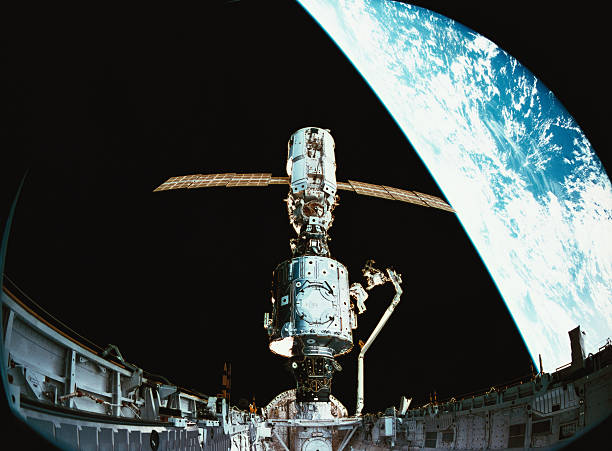
The technology that fixes this is not sexy, but it is brutally effective. Modern spacecraft like the International Space Station use a multi-stage filtration system. First, high-efficiency particulate air filters catch dust and shed skin flakes. Then comes the real work: activated charcoal beds. Charcoal is a porous carbon material that acts like a molecular sponge, trapping large organic molecules through a process called adsorption. It’s the same stuff in your fancy water filter, but tuned for air. It grabs the smelly culprits—the volatile organics that hit your nose as “funky” or “chemical”—and holds them tight.
But charcoal has limits. It can’t handle everything. Small, polar molecules like ammonia and formaldehyde slip right through. That’s where catalytic oxidizers come in. These devices heat the air to several hundred degrees Celsius and pass it over a catalyst—often platinum or manganese dioxide. The heat breaks the molecular bonds of the trace contaminants, and the catalyst forces them to react with oxygen, turning them into harmless carbon dioxide and water vapor. A separate device, the Carbon Dioxide Removal Assembly, scrubs the CO2 you exhale so you don’t suffocate. Taken together, this system keeps your air breathable for months without a single fresh breeze from Earth.
Now, about the smell. You might think that if the chemistry is perfect, the air should be odorless. It isn’t. Astronauts consistently report that space station air has a distinct “smell of space”—often described as a mix of gunpowder, burnt steak, and ozone. That’s because even with perfect filtration, trace amounts of compounds from electronics, boosters, and the station’s own recycling systems survive. The smell isn’t a failure; it’s a fingerprint. It tells you that the hardware is working, that the recycling loops are active, and that you are not breathing Earth air. For veterans, that smell becomes a homecoming signal. For rookies, it’s a constant reminder that you are far from home and entirely dependent on the machine around you.
The future of this technology is where things get interesting for long-duration missions. A trip to Mars takes six to nine months, and a surface stay could last over a year. You cannot simply fly up more charcoal canisters. The next generation of trace contaminant control is moving toward regenerative systems. One promising approach is the use of metal-organic frameworks, which are crystalline structures that can be engineered to capture specific molecules with much higher efficiency than charcoal. Another is plasma-based oxidation, which uses electric fields to create reactive species that break down contaminants at room temperature, saving power.
But the most radical shift is bio-regenerative life support. Imagine a sealed greenhouse module where algae or engineered bacteria consume the trace contaminants and your CO2, producing fresh oxygen and edible biomass. The smell in that habitat wouldn’t be chemical—it would be earthy, humid, alive. That’s the long-term goal: to replicate Earth’s natural filtration cycle in a can. Until then, your survival—and your ability to not gag every time you walk into the galley—depends on a network of charcoal beds, heaters, catalysts, and sensors that work silently, round the clock, in the vacuum of space.
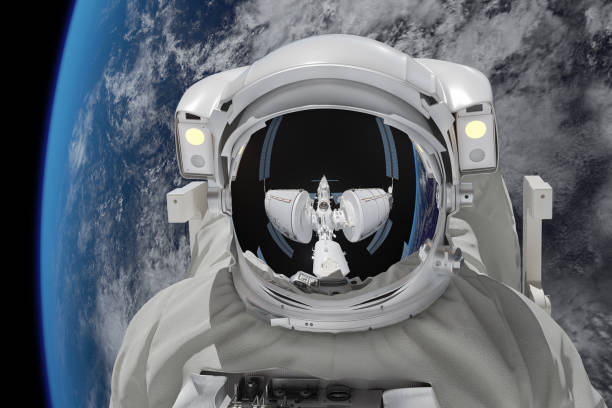
So the next time you see a picture of an astronaut smiling inside a space station, remember that smile is held in place by a system that fights off invisible poison every second. The technology doesn’t just keep you alive. It keeps you from smelling the reality of your own decomposition, your own machinery, your own fragile hold on a breathable atmosphere. It’s not glamorous. It’s life support. And it works.
Space News
Latest Articles
New rockets, upcoming launches, and the stories shaping humanity's push off this planet. No astronomy degree required.