Parallel universes and the testability problem
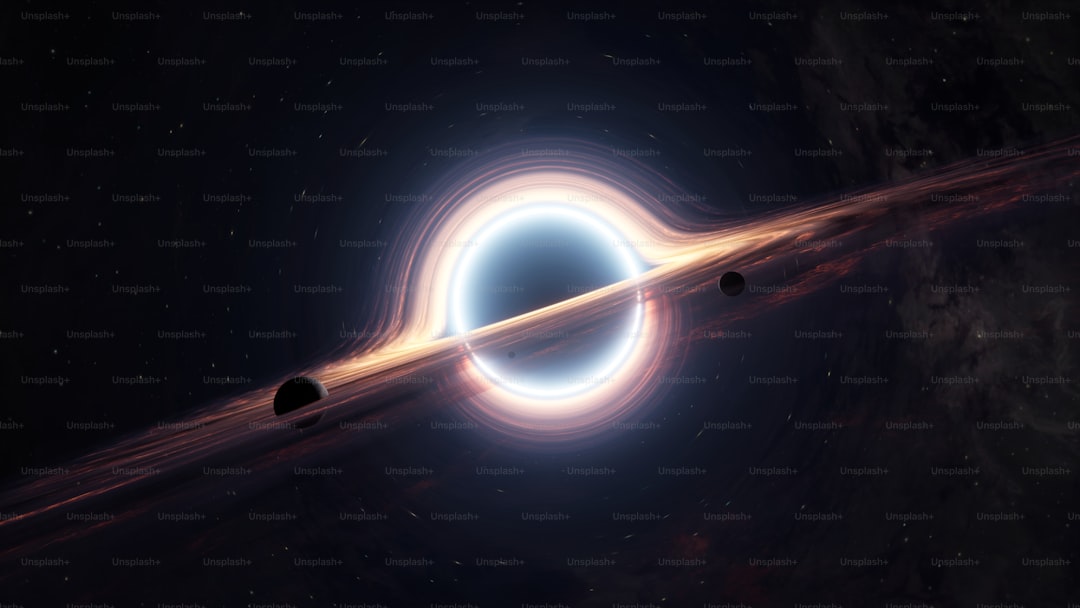
Let’s get one thing straight. Multiverse theory isn’t one idea—it’s a family of ideas. The most mainstream version comes from eternal inflation. In this model, the universe we see is just one bubble in a foam of bubble universes, each with its own physical laws. Another flavor comes from quantum mechanics: the many-worlds interpretation, where every quantum event splits reality into branches. Both are mathematically plausible. Neither is directly observable. That’s the testability problem in a nutshell. A theory that explains everything explains nothing unless you can check it.
For a casual space enthusiast, this might sound like a debate for philosophers, not rocket scientists. But the stakes are higher than that. If we can’t test the multiverse, we can’t distinguish it from a fairy tale. That’s why the cutting edge isn’t in building a particle accelerator big enough to smash universes together. It’s in looking out at deep space for indirect signatures. And here’s where it gets interesting: we might already have the tools.
The cosmic microwave background, or CMB, is the afterglow of the Big Bang. It’s a map of the universe when it was only 380,000 years old. In eternal inflation, bubble universes can collide. If our bubble bumped into another one, it would leave a pattern in the CMB—a cold spot, a hot spot, or a weird circular distortion. Astronomers have looked for these. In 2015, the Planck satellite found a mysterious cold spot in the CMB, and some researchers argued it could be a bubble collision. Most now think it’s a statistical fluke, but the search isn’t over. Future surveys like the Simons Observatory or CMB-S4 will scan with higher resolution. If we see multiple such anomalies with consistent signatures, that’s a smoking gun. Deep space, in this case, isn’t just a backdrop. It’s a laboratory.
Another angle comes from the nature of dark energy. In a multiverse, different bubbles have different vacuum energies. Ours happens to be small enough to allow galaxies and life. That’s fine, but it’s also a cop-out: it explains why we see what we see without predicting anything specific. However, if astronomers can map the distribution of dark energy across the sky—if it varies—that could suggest our universe is interacting with neighbors. That’s a long shot with current tech, but projects like the Dark Energy Spectroscopic Instrument, or DESI, are already charting the expansion history of the cosmos. If the data shows unexpected patterns, the multiverse goes from fun idea to serious hypothesis.
Then there’s the quantum side. Many-worlds suggests that every quantum event splits reality. That’s hard to test because the branches don’t interact. But some physicists, like David Deutsch, argue that quantum computers could require a multiverse to explain their power. If a quantum computer solves a problem too fast for classical logic, it might be processing across parallel worlds. That’s not deep space, but it’s a testable prediction—and one that ties the cosmos to the lab.
Let’s be honest: none of this is easy. The multiverse is a theory that resists proof by design. If you can’t see another universe, you have to look for shadows it casts on our own. That means patience, better instruments, and a willingness to follow weird data. For the guys reading SpacePilgrim.com, the takeaway is this: the multiverse isn’t settled science, but it’s not pseudoscience either. It’s a frontier problem, and deep space is the only place we’ll find the answer. The next time you hear about a new telescope or a CMB anomaly, remember: we’re not just mapping stars. We’re looking for footprints from neighborhoods we can never visit.
So keep your eyes on the sky. The multiverse may be untestable today, but tomorrow’s deep-space survey might change that. And if it does, the guy who ordered pizza in this universe will be glad he did.
Space News
Latest Articles
New rockets, upcoming launches, and the stories shaping humanity's push off this planet. No astronomy degree required.